NBA Game Breakdown: How the Celtics Mastered the Transition Defense
The Role of Guards in Transition Defense
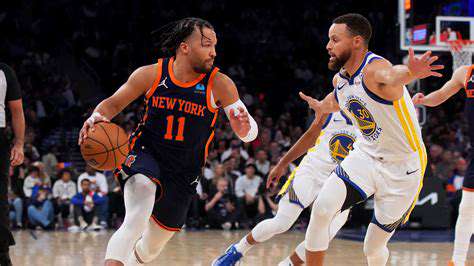
Guards play a pivotal role in transition defense due to their speed and agility. They are typically the first line of defense against fast-break attacks, tasked with slowing down opposing players or forcing them to alter their paths. An effective guard can pressure the ball handler, making it difficult for them to execute their offensive strategies. This often involves a mix of on-ball pressure and strategic positioning.
Moreover, guards must also communicate with their teammates, ensuring everyone knows their respective assignments during a fast break. Without proper communication, even the best individual defenders can struggle to execute an effective transition plan.
How Forwards Contribute to Defensive Transition
- Forwards are essential for securing rebounds and preventing fast breaks.
- Their versatility allows them to guard multiple positions efficiently.
Forwards are crucial in transition defense, particularly because they can often fill both rebounding and defensive roles seamlessly. After a missed shot, strong rebounding from forwards reduces the likelihood of allowing fast breaks.
Additionally, they have the physicality and speed to match up against opposing forwards or wings in transition, making them indispensable during these crucial phases of play.
The Significance of Big Men in Fast Break Scenarios
While guards and forwards are essential, big men hold a unique position during transition defense. They are often tasked with protecting the rim in case opposing players break through the initial line of defense. Their presence deters fast breaks by providing an imposing figure in the painted area.
Moreover, big men must also be able to quickly sprint back on defense after a shot, contributing to the overall team structure. If they can alter shots or secure rebounds effectively, they play a critical role in limiting transition opportunities for the opponent.
Coaching Strategies for Effective Transition Defense
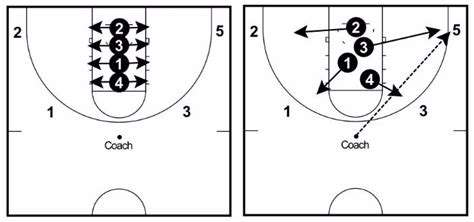
Coaches play a vital role in determining how their team executes transition defense. Implementing structured drills that focus on quick recovery and proper spacing are essential for instilling these concepts in players. Additionally, film analysis can provide invaluable insights into both your team’s and opponents’ transition tendencies.
Building a culture of accountability among players is equally crucial. Emphasizing the importance of every player's role in transition defense fosters a more cohesive unit, where each individual understands their importance in preventing opposing teams from gaining momentum.
Evaluating Transition Defense Through Analytics
In the modern age of basketball, analytics have become integral to evaluating a team’s defensive performance in transition. Advanced metrics can reveal specific weaknesses in transition defense that may not be visible to the naked eye. Tracking statistics such as points allowed per transition opportunity can illuminate where improvements are needed.
Teams that utilize analytics effectively can tailor their defensive strategies to address identified weaknesses, creating a more adaptive and resilient transition defense. By continuously assessing these metrics, teams can fine-tune their approach and react dynamically to opponents’ strategies.
Utilizing Defensive Footwork and Positioning

Understanding Defensive Footwork Techniques
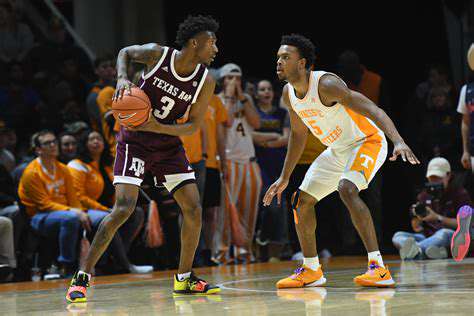
Defensive footwork is foundational for any player aiming to excel in basketball. *Good footwork enhances balance, agility, and reaction time, making it easier to stay in front of opposing players.* This skill involves quick lateral movements, pivots, and explosive starts, all aimed at disrupting an opponent's rhythm.
One effective technique is the drop step, where players utilize their body weight to establish position while keeping their center of gravity low. This method can thwart drives to the basket, allowing defenders to maintain an advantageous stance against their opponents.
- Quick lateral movements are crucial for effective guarding.
- Utilizing a drop step helps defenders maintain positioning.
- Proper footwork creates opportunities for intercepting passes.
Importance of Positioning in Defense
Positioning is an integral aspect of defensive play, particularly in transition defense. *Being in the right place at the right time can make or break a defensive possession.* Players must focus on spacing and angles, ensuring they block driving lanes and cut off easy scoring opportunities.
The Celtics have demonstrated exceptional positioning techniques, often rotating seamlessly to support each other. This system relies on communication, awareness, and understanding the offensive strategies of their opponents. By working together, players can optimize their defensive structure.
Transitioning from Offense to Defense
The transition from offense to defense is a critical moment in basketball. Teams must react swiftly once possession changes. The Celtics excel in this regard, often trying to identify the nearest offensive threat within seconds. This quick detection allows them to pressure the ball handler immediately, stifling any fast breaks.
Research from basketball analytics firm Synergy Sports illustrates that effective transitions can significantly reduce opponents' shooting efficiency. *In fact, teams with strong transition defenses tend to limit opposing teams to fewer than 100 points per game.* The Celtics' ability to capitalize on their defensive skills during these moments is a key factor in their success.
Practical Drills to Improve Defensive Skills
To develop defensive footwork and positioning, players can utilize specific drills tailored for practice. One recommended drill is the closeout drill, where players approach a shooter with the intent to contest. This drill reinforces proper footwork while also emphasizing the importance of maintaining balance and leverage.
Another effective exercise is the shell drill, which focuses on team positioning and communication. Players form a shell around an offensive player, rotating and adjusting to different passing angles. *This drill enhances both individual and collective defensive skills, preparing players for real-game situations.* Incorporating these drills into regular practice can lead to marked improvements in defensive capabilities.
Statistics and Impact on Game Outcomes
Understanding Transition Defense Metrics
Transition defense is often evaluated through various statistics, including points allowed per possession and turnover rates. According to recent studies, teams with lower transition points allowed often have a direct correlation with their overall win-loss record. In the 2022-2023 NBA season, for instance, the Boston Celtics achieved a remarkable feat by ranking in the top five for both transition points allowed and opponent turnover percentage.
Analyzing the Celtics' performance further, it's crucial to recognize their ability to recover quickly after a missed shot or a turnover. Advanced metrics show that they were able to limit opponents to just 1.05 points per possession in transition scenarios. This statistic highlights not only the efficacy of their transition defense but also the execution of their defensive formations and rotations. The precision in their defense showcases the coaching strategies employed to minimize scoring attempts during quick breaks.
The Impact of Defensive Strategy on Game Outcomes
Effective transition defense can significantly influence the outcome of a game. For example, during the playoffs, when every possession counts, the Celtics' ability to stifle opponents in transition became a notable factor in their success. In particular, in their Conference Semifinals matchup, they effectively reduced the Miami Heat's fast-break points to under 10 per game, a figure that contrasted sharply with previous encounters where their defense faltered.
Moreover, it's essential to consider how rigorous defensive strategies lead to offensive opportunities. In games where the Celtics excelled in transition defense, they often capitalized on their opponents' turnovers, converting a substantial percentage into fast-break points for themselves. This not only boosts their scoring efficiency but also adds pressure on their opponents, ultimately shifting the momentum in favor of the Celtics. Coaches looking to enhance their strategies might examine the Celtics' approach as a case study in effective transition gameplay.
Read more about NBA Game Breakdown: How the Celtics Mastered the Transition Defense